It is with much excitement that the USFA would like to announce that the NSW State Spearfishing titles will be held on the October long weekend in conjunction with the Tomakin Sporting Clubs Fishing Bonanza. The State Titles will be a one-day pairs event on the Sunday only and as with all USFA competitions full USFA membership will be required to fish. Pair’s events are becoming more popular in our region and this is the format favoured by our neighbouring countries and the format of our most esteemed competition with them. By incorporating this competition with the Tomakin Fishing Bonanza there is the opportunity to further promote this event, promote pairs competitions and spearfishing to the broader community. On the Saturday morning we also plan to run a spearfishing induction course and then encourage experienced divers to accompany the tyro’s on a dive. There will be incentives to participate in this.
It was decided at the USFA executive meeting last Thursday to keep the USFA membership fee at $90. This was achievable due to discounts on our insurance; the level of coverage still remains the same as when the premiums were higher. The executive have worked hard with our insurance provider to create this policy and although some feel it is too expensive, we believe it represents good value and is the best currently available to spearo’s in Australia. As spear fishers in other states and territories become aware of this policy, we expect to increase our membership footprint outside of NSW as a result.
The USFA is the peak spearfishing body in NSW and has always advocated for spearfishing access and rights to all spearo’s, be they a member of the Association or not, this is always our default position. In order to improve communication it has been agreed that we should offer a ‘social membership’ to the USFA at nil cost. This is in the hope of improving communication, inwards and outwards, and also that more people will then see the value in taking up full membership with the USFA. This social membership will not have the voting rights, insurance or other benefits of full members, however as we are the strongest voice for all spearo’s in NSW in the legislative and regulatory process, we feel improving our relationship with all of our extended tribe is very important.
Thursday evening also saw the AGM held and the re-election of the entire executive to their previous positions. Two new executives to previously unfilled positions were filled by Bob McComb as Deputy Chair and Simon Horvath as Information Officer, this new influx of experience and enthusiasm is a deliberate attempt to improve consultation with members and stakeholders. Changes to our constitution are also being discussed at the executive currently; these can only be made with the mandate of the membership. All members will be given notice well in advance and we ask that you consider these and the intent of any changes and vote accordingly.
“Where there is unity there is always victory” (Publilius Syrus).
January – Gunnamatta – Cancelled – dangerous ocean conditions
February – Terrigal – Results
March – Kurnell – Cancelled – dangerous ocean conditions
April – Little Manly – Results
May – Port Kembla – Results
June – Gunnamatta – Results
July – No Competition
August – Bayview – Results
September – Long Reef – Cancelled – dangerous ocean conditions
October – Kurnell – November – Watsons Bay – Results
December – Gunnamatta –
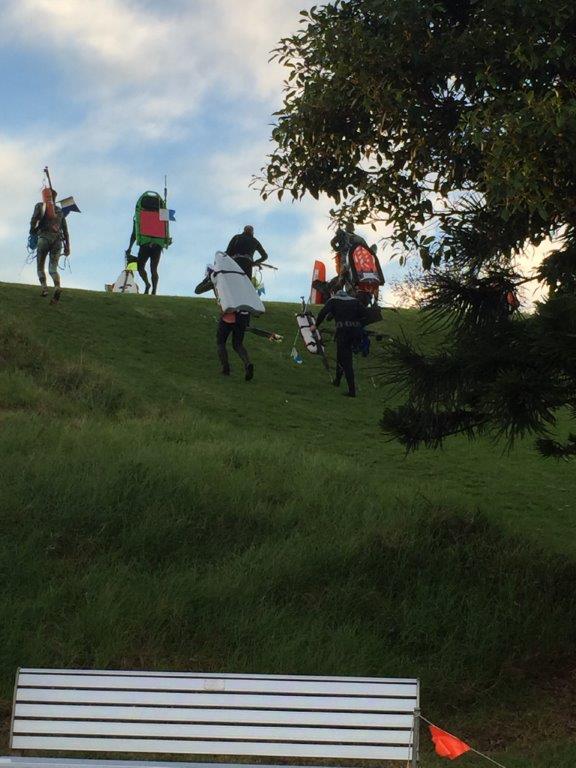
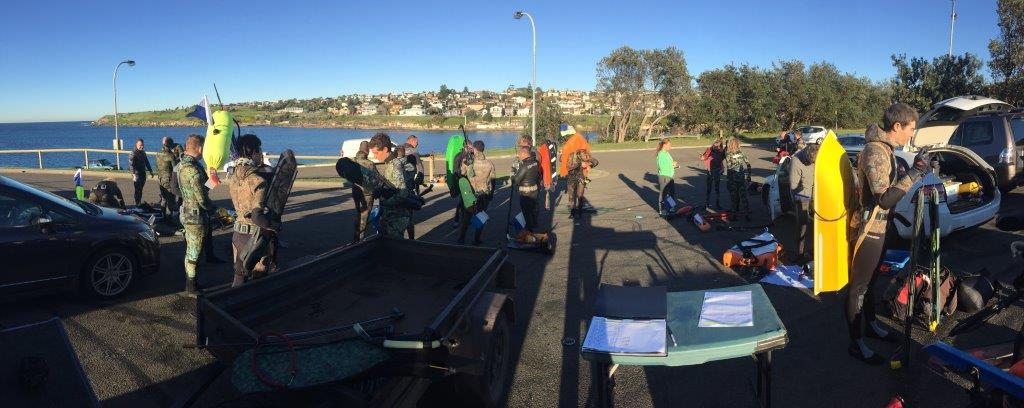
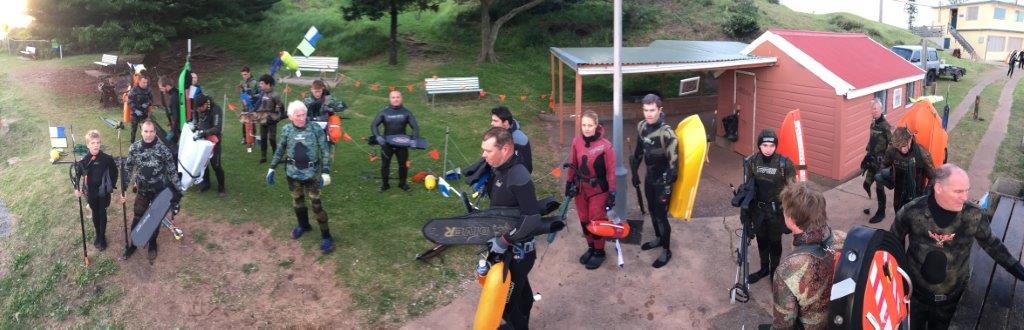
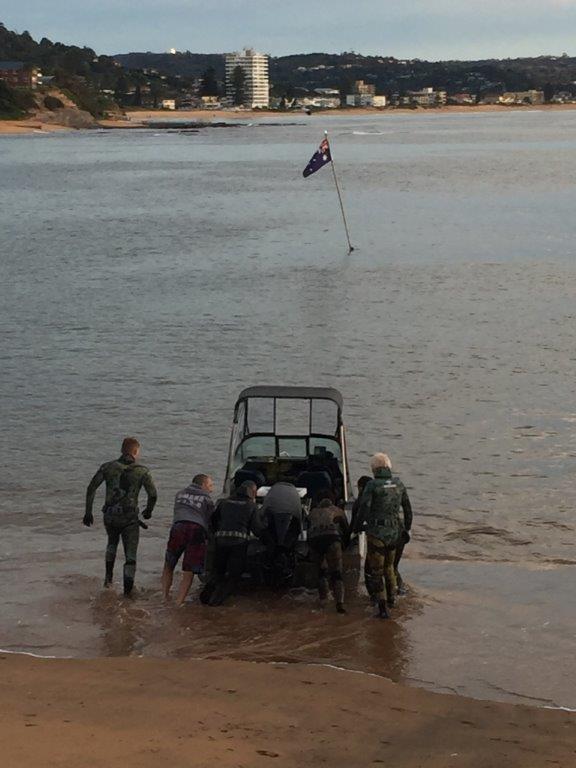
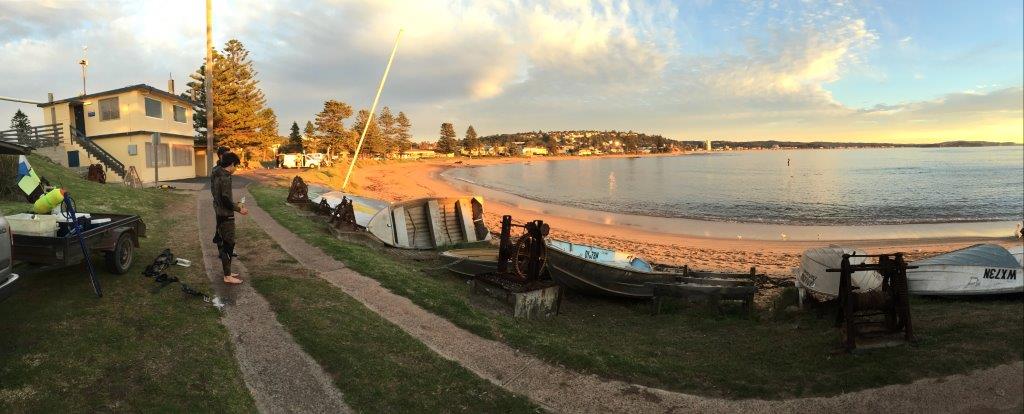
It was a good looking day as the boats gathered in the bay below the historic fishermen’s hut at Long Reef. The fifteen odd boats and nearly fifty divers signed on listened to the safety talk, and waited impatiently for the start. North Shore meant business with a roll up of twenty six divers! After the roll call the divers went to their respective boats and motored out a few hundred yards off shore where the flag start was done from big Maccas boat and boats raced north and south to their dive spots.
Well it wasn’t a good forecast for the Sunday of the Alliman with gale force winds and a big swell running all week not helping. But the brave sport secretaries of each club voted for the comp to be on and on the dawning of the day a dozen boats and nearly forty divers turned up to compete on what turned out to be a pretty good day.
After the safety talk the boats motored slowly down the four knot channel to Pittwater and the open ocean. Weigh in was at 1:30pm sharp and luckily all divers were back in the ring well before the cut off time. The weighing and scoring commenced and as we were next to the huge dog park we had a lot of interested persons and their canine friends to see the fish that came in. One cute pooch modelled the Aussie spearfishing team cap (available from me for $25, please support your team!) and another cute little Maltese helped Gordy with the scores! (See pics).
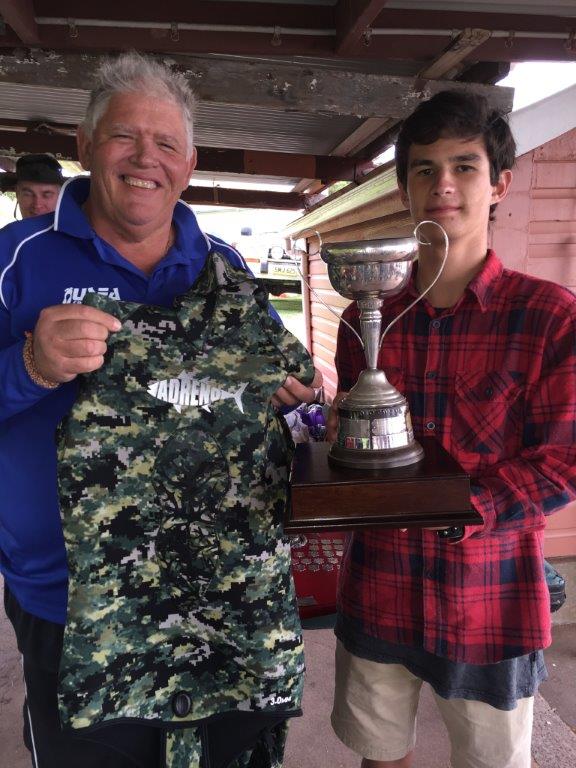
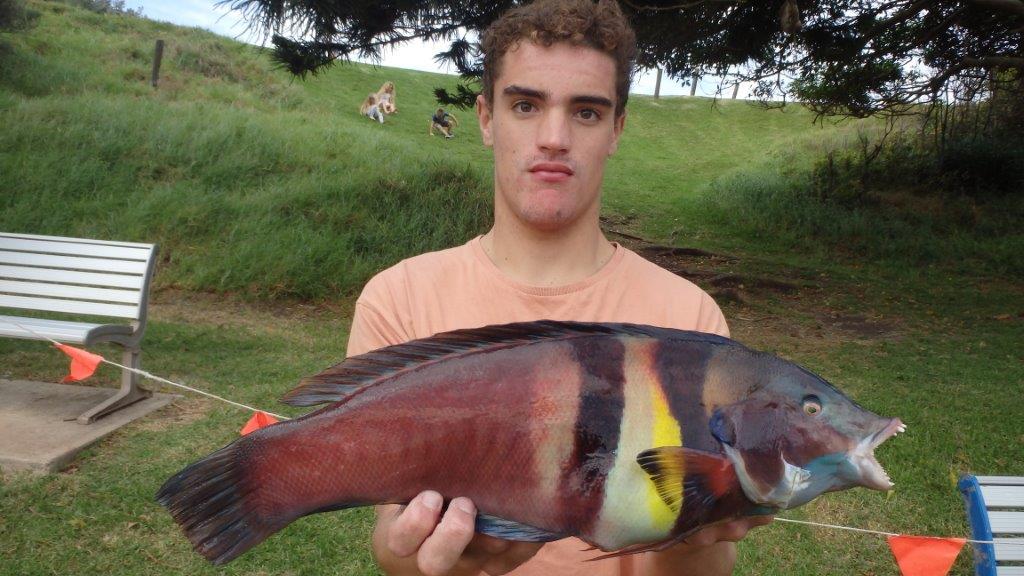
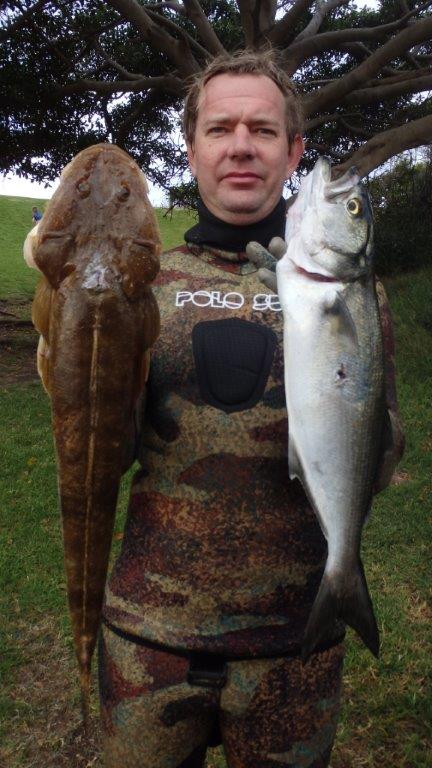
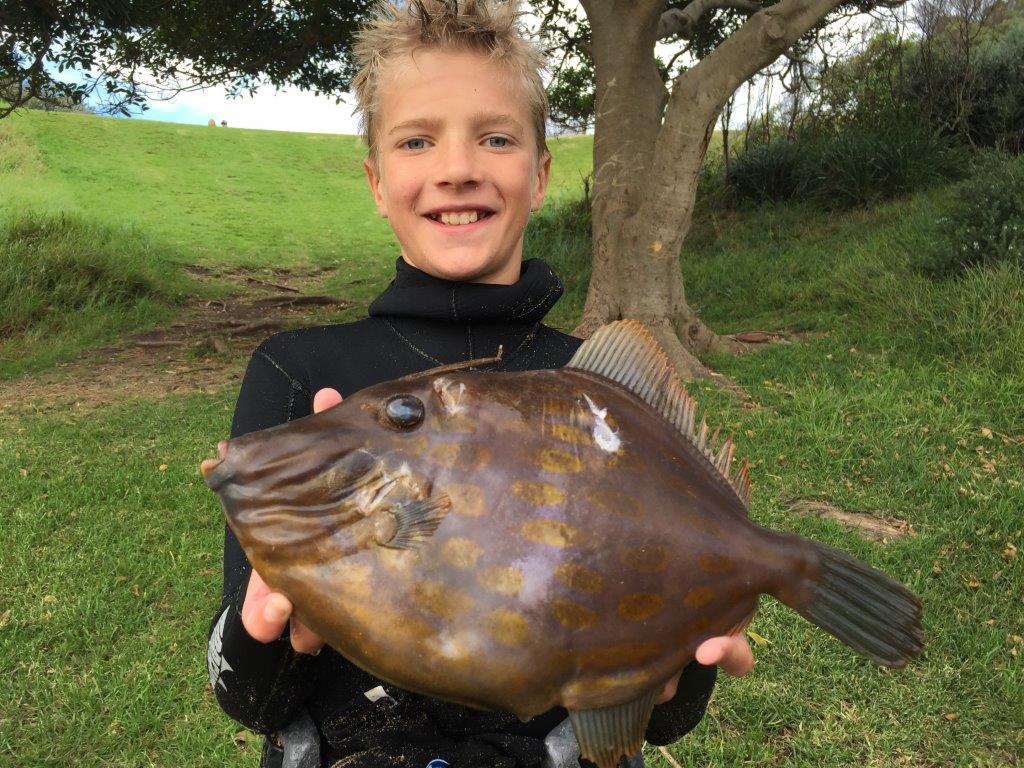
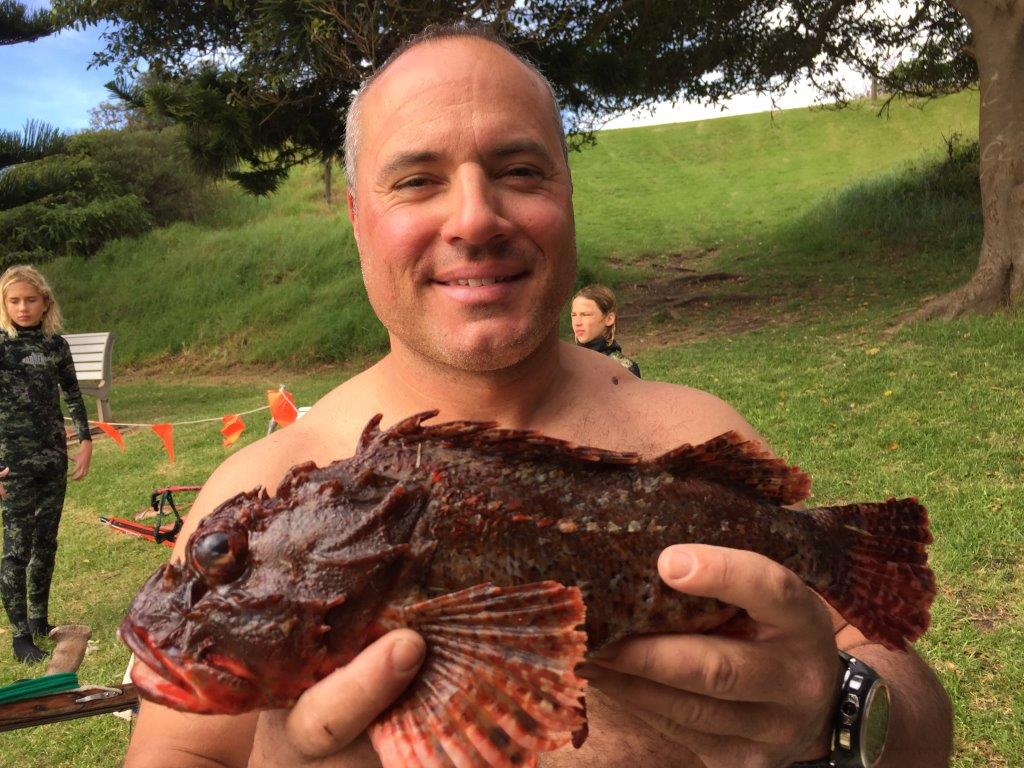
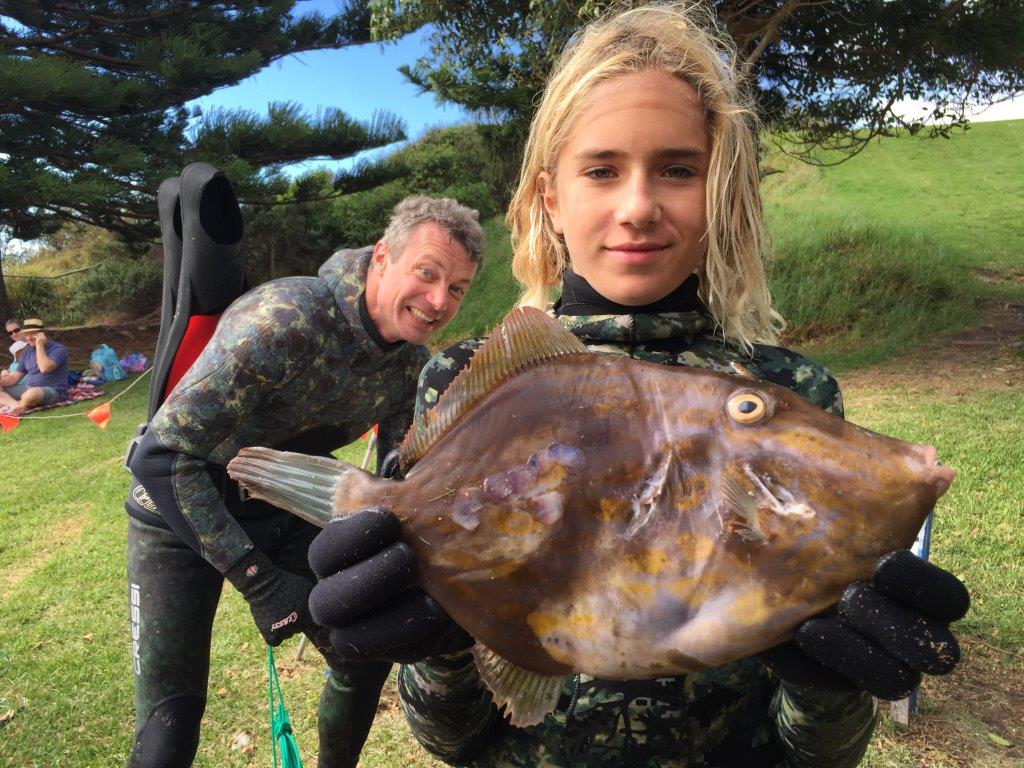
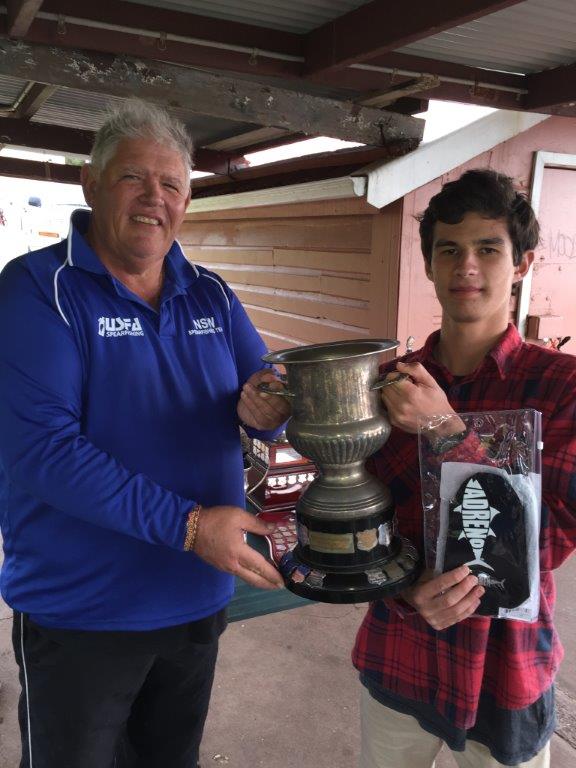
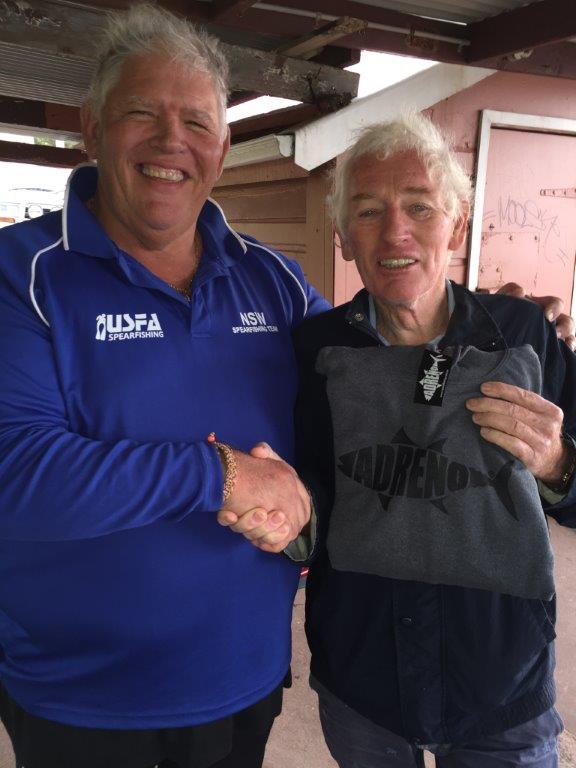
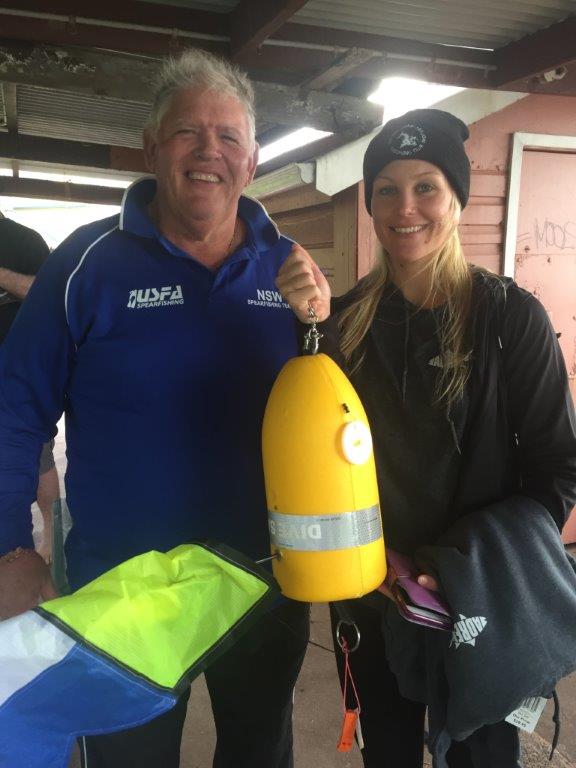
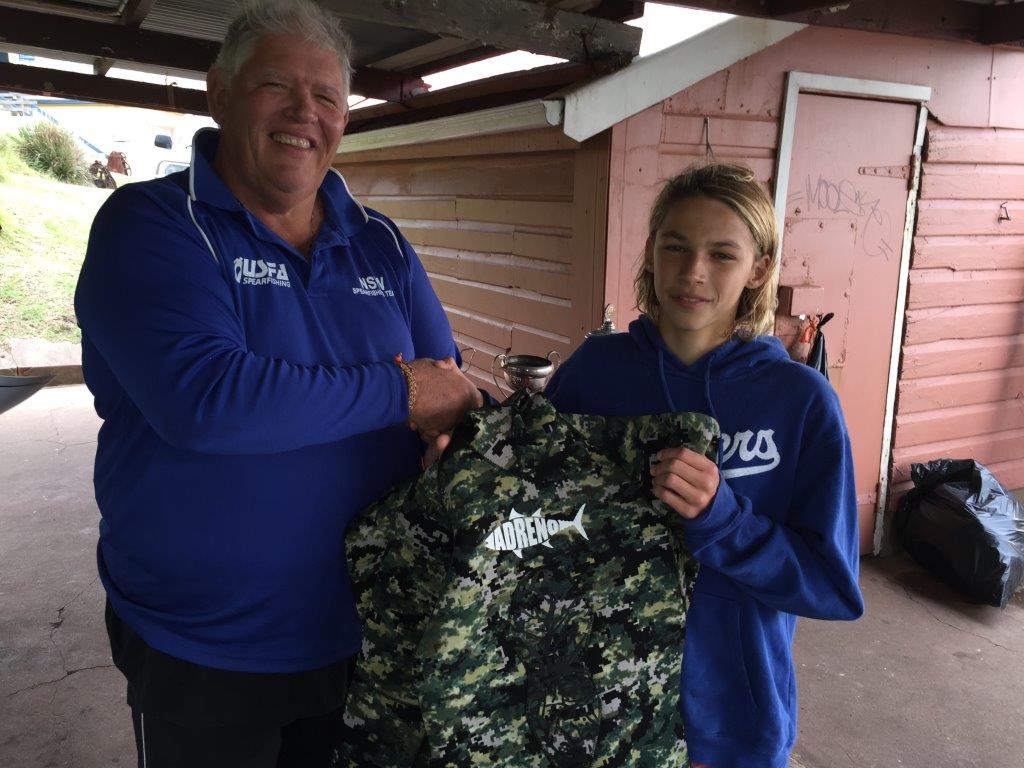
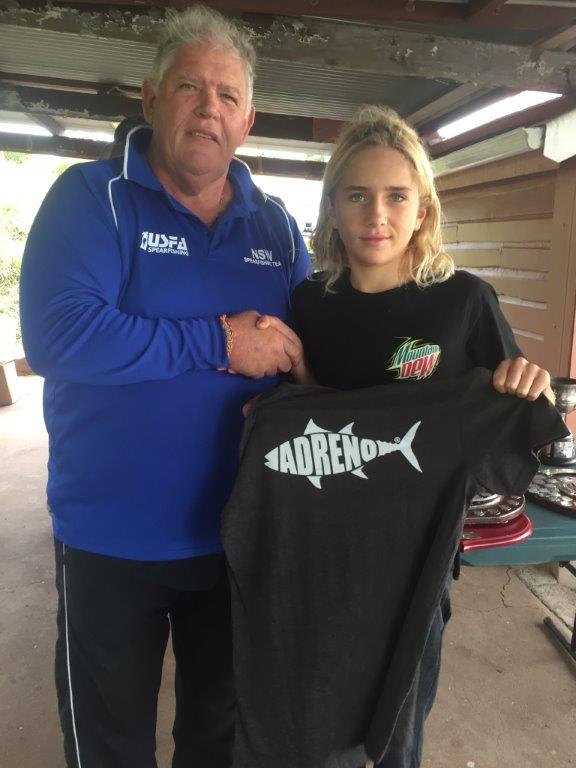
The ‘Adreno’ Most Meritorious Fish winners for this competition are Ben’s (STG) big bream for the senior category and young Eddie Sherb (SSD) with a 48pt Reef Leatherjacket, prizes will be presented before the competition at Long Reef. Remember anyone can win win one of these prizes but only if you compete!
In February of 1951 the Underwater Spear Fishermen’s Association (USFA) produced its first magazine, “Spearfishing News”. With USFA secretary Jim Ferguson as editor this publication consisted initially of 6 typewritten pages. Produced monthly it contained hints on spearfishing and equipment, information on rules, monthly and committee meetings, clubs, trophies and a Man of the Month section.
“Spearfishing News” continued being produced by the committee every month until September of 1952 when it first appeared as a commercial publication of 24 A5 pages. After the first 2 issues Jim Ferguson wasn’t happy with the new format and reverted to a typewritten publication for the November issue.
At the November committee meeting of the USFA Jim Ferguson was requested to outline his plan for the future of the magazine. As the committee wished to continue with a commercially printed publication Jim Ferguson resigned and a magazine committee consisting of Edward Du Cros (Editor), Keith Vagg (Associate Editor ) and Jeff Jackson (Advertising) was elected with the first issue being in December 1952 with a cover price of one shilling.
The September 1953 issue saw a name change to the “Australian Skin Diving & Spearfishing Digest” and in November of 1953 Keith Vagg took the reins as Editor.
Producing the magazine was a continuing struggle and in July of 1954 the production and Editorial role for the magazine passed to Phil Knightly. In November of 1954 he was replaced with Richard Dreyfus, who worked in the Mirror office.
By January of 1955 it was reported that the handling of the magazine was unsatisfactory and the services of Mr. Dreyfus were dispensed with. The Feb-March 1955 issue was produced by Dick Barton as temporary editor until September of 1955 when Ray Cooper became the editor. In August of 1956 John Thompson as the USFA’s Business Manager took on the task of producing the magazine until October of 1960 when H.R.Smith & Biro with Bob Smith as Editor, produced the magazine for the USFA.
Australian Skindivers Magazine – March 1961
This commercial agreement did not work out and in March of 1961 the USFA again resumed control with a new editor and a new name. With Jack Evans as editor and the title “Australian Skindivers Magazine” (ASM), production ran smoothly under his stewardship until he reluctantly relinquished his position as editor, due to overseas commitments. Jack Evans last magazine was the June/July 1969 issue.
John Gillies was then appointed editor with the July/August 1969 edition his first issue with another first for the ASM, a coloured front cover. However by July of 1970 a financial storm was gathering with the USFA not being in the position of being able to pay the printers for the release of the June/July 1970 issue. When payments were recouped by advertisers, the July issue was belatedly released, this being the final issue of the ASM.
During 1968 a new publication became available nationally with the title “Diver Magazine”. Consisting of 24 pages it was sponsored by Brisbane’s Underwater Adventurers Club with the editor being Don Scheikowski. It appears to have been confined to just a single issue.
This was followed in October of 1969 by “Australian Diver”, also with Don Scheikowski as editor. With a cover price of thirty cents and 24 pages of content it lasted for three monthly issues.
In the latter half of 1970 the man who was to become the undisputed king of dive publishing in Australia introduced his first publication “Skindiving in Australia”.
Barry Andrewartha had developed a passion for skindiving after seeing a spearfisher in action while on holidays at Lorne in 1954. The following year Barry began to spearfish and joined the Black Rock Underwater Group and two years later the USFA of Victoria where he held a number of positions.
Barry had served an apprenticeship in the printing industry as a compositor and later formed a friendship with Jack Evans, the editor of ASM, and began assisting with its production, producing half tone printing plates and other items and on the way gaining much invaluable experience.
Realising the ASM’s demise was inevitable Barry planned to fill the void with “Skindiving in Australia”. Initially produced as a quarterly magazine it underwent several name changes in its 46 years of uninterrupted production.
MAGAZINE TIMELINE
1970 August? Skindiving in Australia 1st Edition
1974 Vol. 4 No 5 Name change to Skindiving in Australia and New Zealand
1980 Vol. 10 No 2 Name change to Skindiving in Australia & the South Pacific
1987 March/April Sport Diving in Australia & the South Pacific N0.1
1993 June/July Name change to Sport Diving
2016 June/July Final issue of Sport Diving (No. 171)
In October of 1978 Barry Andrewartha first published “Dive News”, on behalf of the Scuba Divers Federation. With Peter Stone as editor and a cover price of 20 cents this eight page newspaper ran for three years until it was discontinued due to lack of support.
Then in August of 1988 with David King as editor Barry published the first issue of “Dive Log”. Initially a 20 page tabloid style newspaper it was available free of charge each month through Dive Shops. It ran very successfully but rising costs caused production to be discontinued with Dive Log available online. Production of a printed issue was recommenced, being available through newsagents and is now a flagship publication incorporating Sport Diving.
Then followed “Scuba Business” a trade journal that ran for four years.
Barry introduced another tabloid newspaper during the summer of 1993/94 when “Australian Freediving & Spearfishing News” became available. In March 1998 with issue number 15 it was renamed “International Freediving and Spearfishing News”. It is still being produced to this day.
In December of 1970 “Fathom” magazine appeared in newsagent’s stands. Produced by Gareth Powell with John Harding as Editor and Roy Bisson in charge of design, Fathom set new standards in production and design and continued for 10 issues until early 1973.
Another magazine with the title of “Australian Diver” was produced in September 1976 by J.W. Publications, Springvale Victoria. Like its predecessor it was short lived.
Neville Coleman published his first issue of “Underwater” in mid-1981. Introduced as a quarterly publication it initially consisted of 48 pages with a cover price of $2.50. In 1989 with issue number 25 the name was changed to “Underwater Geographic”. The magazine had grown to have 96 pages of content and the cover price was now $5.00.
Also in 1981 another magazine catering for scuba divers had its beginnings when in December Chronicle Publications, with Anthony Newly as editor introduced “The Scuba Diver”, a bi-monthly publication of 56 pages with a cover price of $1.95.
The 10th Anniversary issue dated Oct/Nov 1991 with Cassie Welsh as editor and now produced by the Yaffa Publishing Group was renamed “Scuba Diver”. In March/April 1999 it became “Australian Scuba Diver” with Sue Crowe as editor.
The Dec 2001/Jan 2002 issue heralded yet another name change, this being to “Australasian Scuba Diver”. The magazine now had 104 pages of content and with Michael Aw at the helm the magazine was now being printed and published in Singapore.
Described as 68 pages of spearfishing action “Spearfishing Downunder” was introduced as a quarterly publication with Craig Barnett as editor/publisher in 2004.
These periodicals and the many publications produced over time by clubs and state/national organisations etc. encapsulate the events of their time and provide a wonderful resource for historians, now and in the future. No effort should be spared in their preservation.
Following an official complaint made to the Department of Primary Industries about a false statement made in the Hawkesbury Shelf Bioregion Assessment concerning spearfishing, Mel Brown has gotten an apology on behalf of spearfishing.
The two pieces of correspondence mentioned are published here:
Attached are copies of correspondence to Peter Gallagher and Minister Niall Blair concerning a false statement that appears in a document of the Hawkesbury shelf Bioregion.
Peter Gallagher has neither acknowledged receipt of this document or responded to it.
Previously the reasoning for excluding spearfishing from the North Harbour Aquatic reserve whilst continuing to allow other forms of recreational fishing was only made in correspondence to the USFA. To now see this claim, which was utterly false, appearing in print necessitates the strongest possible response.
There was, and never has been, a legitimate reason to exclude spearfishers from this reserve where other forms of fishing are allowed.
The annual state spearfishing titles was hosted the Metro Zone and there were a number of locations earmarked in Sydney for this two day competition on both sides of the Harbour. Divers came from all over from Coffs Harbour (Cheers Brian) and up from Kiama (Max).
Sunday dawned with heavy overcast conditions and rain as the divers gathered in Robertson Park next to the historic Watsons Bay hotel. The safety talk was conducted and the divers jumped into the boats and headed out slowly to outside the moorings where the event start was made from Matt Poulton’s boat.
The rain was a dampener but as the forecast promised sunny conditions later in the day the fifty brave divers headed out into Sydney Harbour hoping for good conditions. As it turned out the conditions were great slight sea light winds, 15 – 20m visibility outside and up to 10m even in the Harbour even though it was low tide.
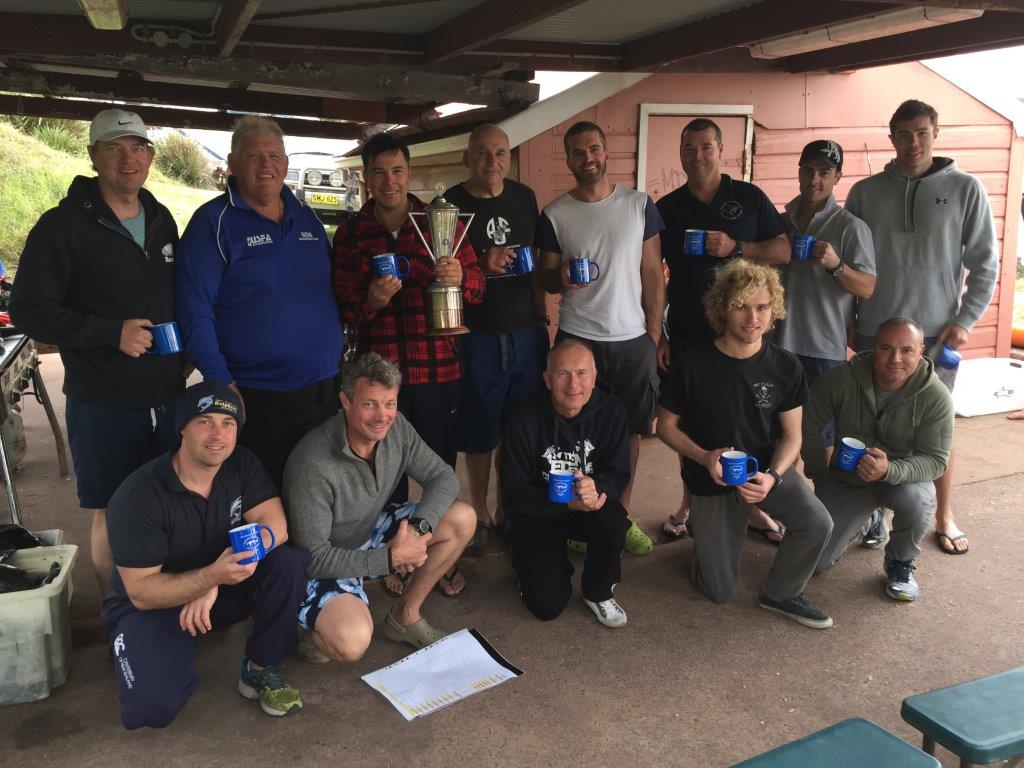
All the boats and divers made it back by the 1:15pm finish time and the fish were lined up at the weigh in table ready for the scoring. At this stage a crowd gathered to see the fish and ask plenty of questions. There was also some fish donated to the onlookers which made us very popular! Continue reading Alliman Shield 2016 – 1st May – Watsons Bay




You must be logged in to post a comment.